
Just Volleyball Tips: 15 Habits That Win
Fifteen practical just volleyball tips on serving, passing, movement, stamina, communication, and the mental habits that turn a rally player into a winner.
Most just volleyball advice is mechanical: press this, aim there. The tips below are the other half. They are the habits that make a player easy to play with and hard to play against, and none of them require a highlights reel.
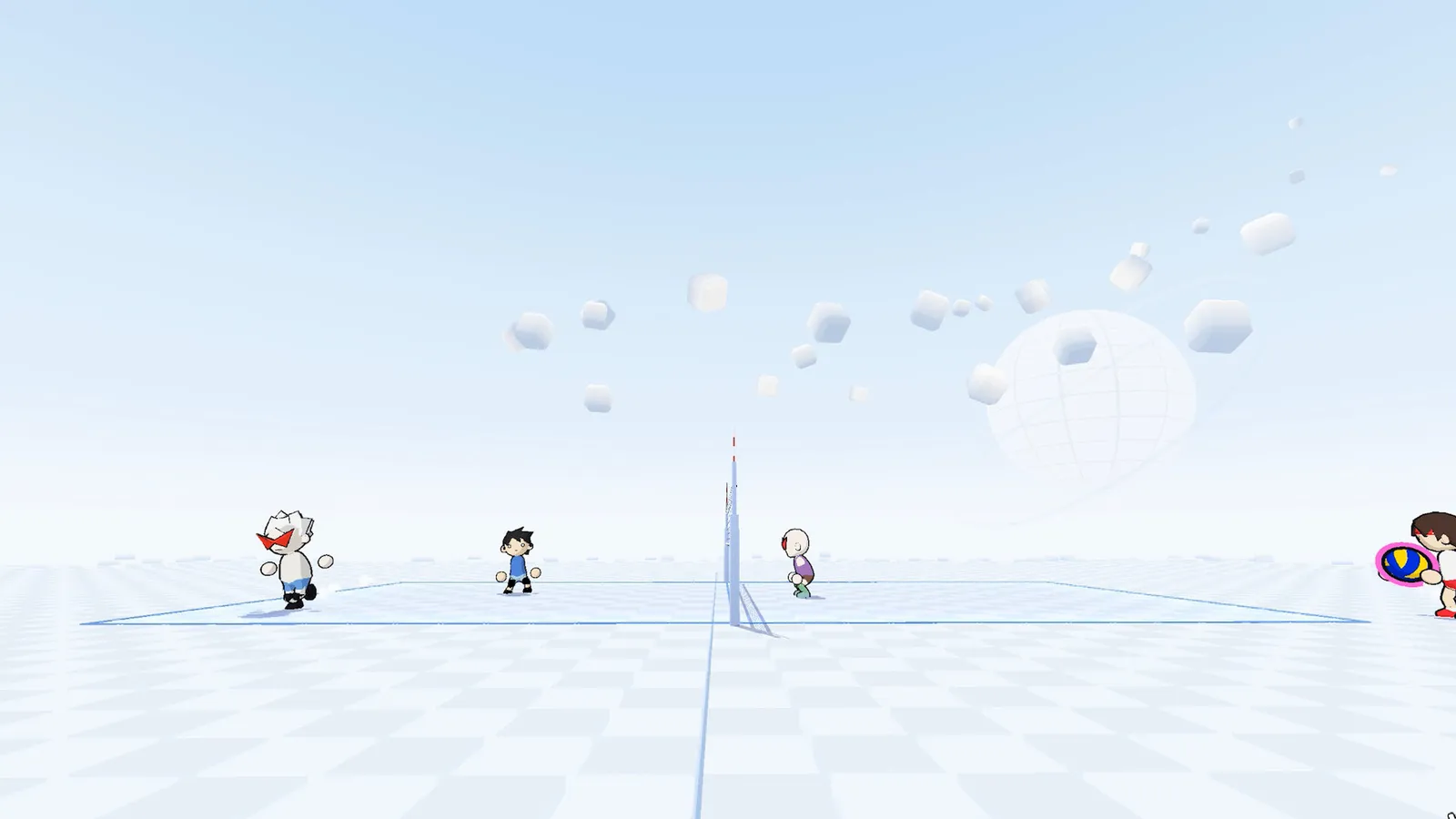
Before every contact, look at where your teammates are. The ball is the second thing you track, not the first.
Serving habits
1. Serve to a person, not to the court. A serve at the best passer is a test. A serve at the weakest passer is a point. Find the player who just shanked a pass and serve at them again.
2. Miss long, not into the net. A deep miss keeps the pressure on the receiver; a net serve gives them a free ball and a free point. Aim a little deeper than feels comfortable.
3. Change the look every few serves. The same deep corner four times in a row lets the receiver adjust. Mix deep, short, and seam, even if the short serve is less powerful.
4. Watch the toss, not the scoreboard. A rushed toss is the root of most serve errors. If the toss is bad, catch it and reset. A second toss is cheaper than a missed serve.
Passing and movement habits
5. Move before the ball crosses the net. The best passers are already in position when the serve arrives. Take two steps early instead of five steps late.
6. Stop before you contact. Moving while passing adds error. Plant your feet, set the cursor, then click. The same applies to setting.
7. Pass high, not hard. A high ball gives your setter time and your hitter a look. A flat pass looks impressive and limits everything that follows.
8. Use strafe to keep the ball in view. Shift lets you slide sideways without turning your back. If you find yourself losing the ball behind your shoulder, strafe earlier.
9. Treat stamina as a resource. Dash and dive are expensive. A player with stamina in the last third of a rally wins more balls than a player who spent it all in the first five seconds.
Setting and attacking habits
10. Set the space, not the player. Aim at the spot where the hitter will arrive, not where they are standing. A set that leads the attacker is worth more than a perfect-looking ball that lands on their head.
11. Look at the block before you jump. The block tells you where to hit. If you decide mid-air, you will hit into it.
12. Use the soft shot. Not every attack needs to be a spike. A roll shot or a tip into the gap is often the highest-percentage play, especially against a committed block.
13. Hit high off the hands when the block is set. A ball that deflects out of bounds is a point. A ball that hits the block straight down is a transition for the opponent.
Team habits
14. Call the ball early. "Mine" prevents two players from watching the same ball land between them. In a pick-up lobby, voice is optional, but the quick chat keys exist for a reason.
15. Cover your hitter. The moment a teammate attacks, move toward the floor behind the block. A blocked ball that gets picked up is a second chance; a blocked ball that hits the floor is a point against you.
The habits that lose rallies
For every good habit, there is a common opposite. These are the five mistakes that show up in almost every beginner lobby:
| Mistake | Why it hurts | Fix |
|---|---|---|
| Chasing the ball with the body | You arrive late and out of balance | Move the cursor first, then the feet |
| Hitting every third touch | The opponent gets a free ball | Pass to the setter, attack only when set |
| Standing beside the block | The deflection lands untouched | Stand behind the block, not next to it |
| Serving to the same spot | The receiver adjusts | Mix deep, short, and seam |
| Diving on every scramble | You run out of stamina and position | Dive only when the ball is about to land |
Reading the game
The difference between a good player and a great one is what they do before the contact. Good players react to the ball; great players read the play.
Three cues are worth watching:
- The setter's shoulders. They tell you where the set is going before the ball leaves their hands.
- The hitter's approach angle. A wide approach usually means a line shot; a sharp approach usually means cross.
- The block's hands. A blocker who commits early can be beaten with a soft shot; a blocker who stays neutral forces a harder angle.
You do not need to read every cue. Pick one per match, and watch it on every rally.
Communication without a microphone
Not every lobby uses voice. The quick chat keys (1-4) cover the basics, but the most useful communication is positional. Stand where your teammate expects you to stand, and move early enough that they can see your intent.
If you do use voice, keep it short:
- "Mine" for a ball you are taking.
- "Free" when the opponent sends an easy ball.
- "Line" or "Cross" for the shot you are covering.
- "Good ball" after a teammate makes a play. It costs nothing and keeps the lobby together.
Settings that quietly win points
A few settings changes are worth more than an hour of practice:
- Zoom out in 5v5 and 6v6. You cannot cover what you cannot see.
- Lower sensitivity if you overshoot the cursor. A calm cursor is more accurate than a fast one.
- Rebind the set key if E is awkward. Reach matters more than tradition.
- Turn on the options that reduce camera motion if you feel queasy. The store lists camera comfort settings for a reason.
The settings guide covers the per-profile binding menu and the accessibility options.
A one-match improvement plan
Do not try to apply all fifteen tips at once. Pick one for a match, and judge yourself only on that habit. For example:
- Match one: serve deep on every serve.
- Match two: pass to a teammate on every receive.
- Match three: stand behind the block on every defensive rally.
- Match four: call "mine" on every ball you take.
Four matches, four habits. That is a faster improvement curve than a dozen hours of unfocused play.
When to ignore advice
Advice is context-dependent. A tip that works in 6v6 may be wrong in 1v1. A serve that works against a weak passer may be a gift against a strong one. The useful question is not "is this true" but "is this true for this lobby, this mode, and this team."
If a tip makes you worse in a specific mode, drop it for that mode. The game modes guide explains how the incentives change from 1v1 to 6v6.
FAQ
What is the single best tip for new players?
Pass to a teammate instead of hitting the ball over the net. It is the habit that unlocks every other skill.
How do I stop losing stamina?
Dash and dive only when the ball is actually reachable. If you are dashing to cover ground you should have covered earlier, the problem is positioning, not stamina.
Should I use voice chat?
If you can. Short callouts are enough, and the quick chat keys cover the basics when voice is not available.
How do I get better without playing online?
Bot matches and solo drills. The beginner guide has a seven-day plan that works offline.
Further reading
Tested source: habit list built from demo community threads and the contact set documented on the Steam store page.
More just volleyball Guides
Fast answers on the just volleyball release date, price, demo, crossplay, gamepad support, LAN, split-screen, system requirements, and launch status.
Every just volleyball team size explained, from the 1v1 duel to the full 6v6 court, with the best mode for beginners and the settings that change a lobby.
A plain-language just volleyball tutorial: the rally flow, the three-touch pattern, each position, and the fastest way to survive your first online match.
A step-by-step guide to playing just volleyball with friends online, on LAN, in split-screen, or via Steam Remote Play, plus fixes for common lobby problems.
How just volleyball multiplayer works across online play, LAN, split-screen, and co-op, including the server browser, lobby sizes, ping, and moderation.
The free public playtest opened on September 23, 2026 on a separate Steam app. Here is how it differed from the demo and whether it is still running.
The developer quoted a $7.99 base price for just volleyball with a 38% launch discount. Here is what is confirmed, what is not, and how regional pricing works.
The defensive half of just volleyball: how to receive a serve, set a hittable ball, position behind the block, and cover the court without wasting stamina.