
Just Volleyball Tier List: Modes and Roles
A just volleyball tier list for modes and playstyles, not characters. See which team sizes are easiest to learn, which roles carry a lobby, and what to avoid.
Just volleyball does not have stat-bearing characters, so the usual tier list format does not apply. There is no S-tier face or F-tier hairstyle. What can be ranked is the mode you choose and the role you play, because those decide how often you touch the ball and how much impact you have.
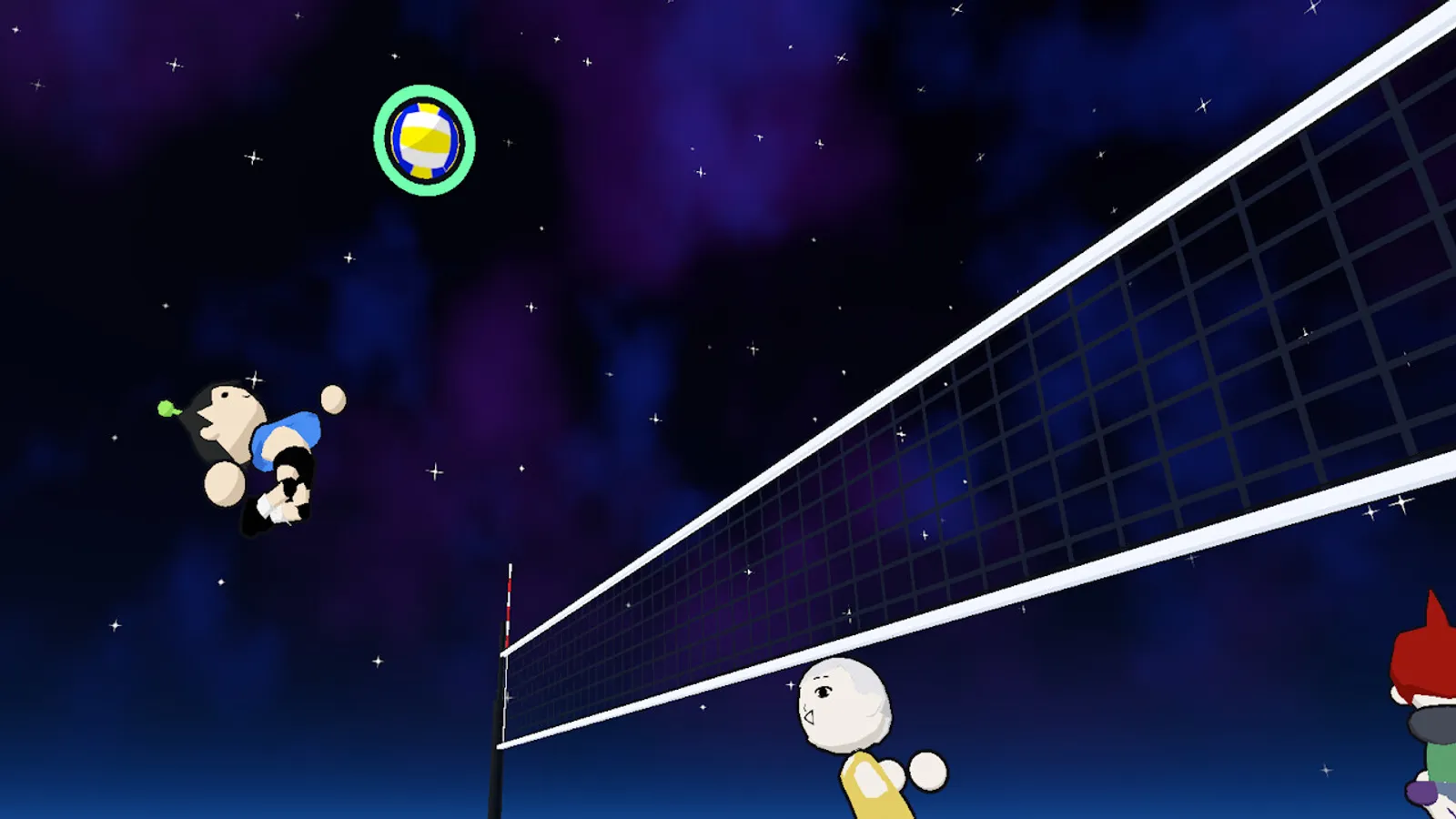
This is a tier list for modes and playstyles, not characters. Any list that ranks named just volleyball characters is ranking something that does not exist.
The tier list
| Tier | Mode | Why |
|---|---|---|
| S | 2v2 | Most touches, fastest learning, best with one friend |
| S | 6v6 | The full game, highest ceiling, needs a real lobby |
| A | 4v4 | Best party mode, forgiving for mixed skill |
| A | 3v3 | The bridge between chaos and structure |
| B | 5v5 | Awkward middle; crowded but not full |
| C | 1v1 | Great drill, brutal first experience |
The order is not a quality ranking. 1v1 is not a bad mode; it is a bad first mode. 5v5 is not broken; it is simply overshadowed by 4v4 and 6v6.
S-tier: 2v2
2v2 is the best mode in the game for most players. You have a partner, so the pass-set-hit pattern appears naturally, and the court is small enough that you touch the ball on most rallies. The feedback loop is short: a mistake costs a point, and you get another rep in seconds.
It is also the most forgiving mode for a beginner. One weak player does not sink the team, because the stronger player can cover more ground. That is the opposite of 6v6, where a weak link is exposed by the block.
If you only play one mode in your first month, play 2v2.
S-tier: 6v6
6v6 is the full version of the game: three front-row players, three back-row players, a real block, and a court that rewards reading. It is the most rewarding mode once you can pass, and the most frustrating mode before that.
The reason it shares S-tier with 2v2 is that they serve different purposes. 2v2 is the classroom; 6v6 is the stage. A player who only plays 2v2 will never learn rotation and coverage. A player who only plays 6v6 will spend a lot of time watching the ball fly past.
A-tier: 4v4
4v4 is the party mode. Four per side gives you enough bodies to cover the court and enough chaos to produce comedy. It is the most forgiving mode for a mixed-skill group, and the best fit for a couch session or a LAN night.
The shape is simple: two blockers and two defenders. That is enough structure to teach the defensive shell without demanding the precision of 6v6.
A-tier: 3v3
3v3 is the transition mode. Three players per side is where a setter emerges, and off-ball movement starts to matter. It is less forgiving than 2v2 and less chaotic than 6v6, which makes it a good stepping stone.
The risk is the empty space. With three players, someone is always away from the ball, and a team that ball-chases will leave a corner open.
B-tier: 5v5
5v5 is the awkward middle. It has most of 6v6's complexity but not the full court's spacing, and two players going for the same ball is more common than in 4v4. Some lobbies love it; many skip it.
It is not a bad mode. It is a mode that needs a full lobby and a team that communicates, which is a lot to ask from a pick-up group.
C-tier: 1v1
1v1 is a great drill and a terrible first date. Every ball is yours, every mistake is a point, and there is no teammate to share the blame. It teaches coverage and shot selection better than any other mode.
Play it when you want to isolate a weakness, not when you want to relax. If you are new, play 2v2 first.
Playstyle tier list
Within a mode, the role you choose has a bigger impact than the mode itself. This ranking is for a pick-up lobby, not a competitive team.
| Tier | Role | Impact |
|---|---|---|
| S | Setter | Turns a bad pass into a hittable ball; makes everyone look better |
| S | Passer | Without a pass, there is no attack |
| A | Blocker | Seals the net and funnels the attack to a defender |
| A | Server | Controls the tempo and targets the weak link |
| B | Hitter | Important, but dependent on the pass and set |
| B | Cover | Undervalued, but a specialist role |
The setter and passer are S-tier because they create the conditions for everything else. A great hitter with no pass is a spectator. A great setter with a mediocre pass can still run an attack.
What is not ranked
- Characters. No stats, no tiers.
- Courts. Seven venues, no confirmed gameplay differences.
- Weapons or loadouts. The game does not have them.
- Premium content. No cash shop or paid advantage has been announced.
If a tier list includes any of those, it is not about this game.
How to use a tier list
A tier list is a starting point, not a rule. The best mode for you is the one with people in it. A B-tier 5v5 lobby with friends is better than an S-tier 2v2 queue with nobody.
The same applies to roles. If your team already has a setter, forcing yourself into the role will hurt the team. Pick the role that fills the gap, even if it is lower on the list.
The tier list for a new player
If you are new and want a single recommendation:
- Play 2v2 for a week.
- Play 4v4 with friends.
- Move to 6v6 when you can pass and block.
- Use 1v1 as a drill, not as your main mode.
That progression is more useful than any ranking. The beginner guide turns it into a seven-day plan, and the game modes guide explains the geometry behind each size.
FAQ
Does just volleyball have a character tier list?
No. Characters are cosmetic avatars with no stat differences.
What is the best mode in just volleyball?
2v2 for learning, 6v6 for the full experience. 4v4 is the best party mode.
Is 1v1 good?
It is a great drill and a harsh first mode. Use it to isolate a weakness.
Are courts different?
No gameplay differences have been announced. The seven courts appear to be venue choices.
Further reading
Official source: just volleyball on Steam for the 1v1-6v6 mode list and avatar features.
More just volleyball Guides
Fast answers on the just volleyball release date, price, demo, crossplay, gamepad support, LAN, split-screen, system requirements, and launch status.
Every just volleyball team size explained, from the 1v1 duel to the full 6v6 court, with the best mode for beginners and the settings that change a lobby.
A plain-language just volleyball tutorial: the rally flow, the three-touch pattern, each position, and the fastest way to survive your first online match.
A step-by-step guide to playing just volleyball with friends online, on LAN, in split-screen, or via Steam Remote Play, plus fixes for common lobby problems.
How just volleyball multiplayer works across online play, LAN, split-screen, and co-op, including the server browser, lobby sizes, ping, and moderation.
The free public playtest opened on September 23, 2026 on a separate Steam app. Here is how it differed from the demo and whether it is still running.
The developer quoted a $7.99 base price for just volleyball with a 38% launch discount. Here is what is confirmed, what is not, and how regional pricing works.
The defensive half of just volleyball: how to receive a serve, set a hittable ball, position behind the block, and cover the court without wasting stamina.