
Just Volleyball Beginner Guide: 7-Day Plan
A seven-day just volleyball practice plan covering serving, passing, setting, spiking, blocking, and positioning, with one focused drill per day.
Most new players learn just volleyball in the worst possible order: they queue for a match, chase the ball, and spend the whole rally recovering from the first bad touch. This plan flips that. Each day gives you one skill and one drill, and the skills stack in the order the game actually uses them: serve, receive, set, attack, block, cover, then the whole rally.
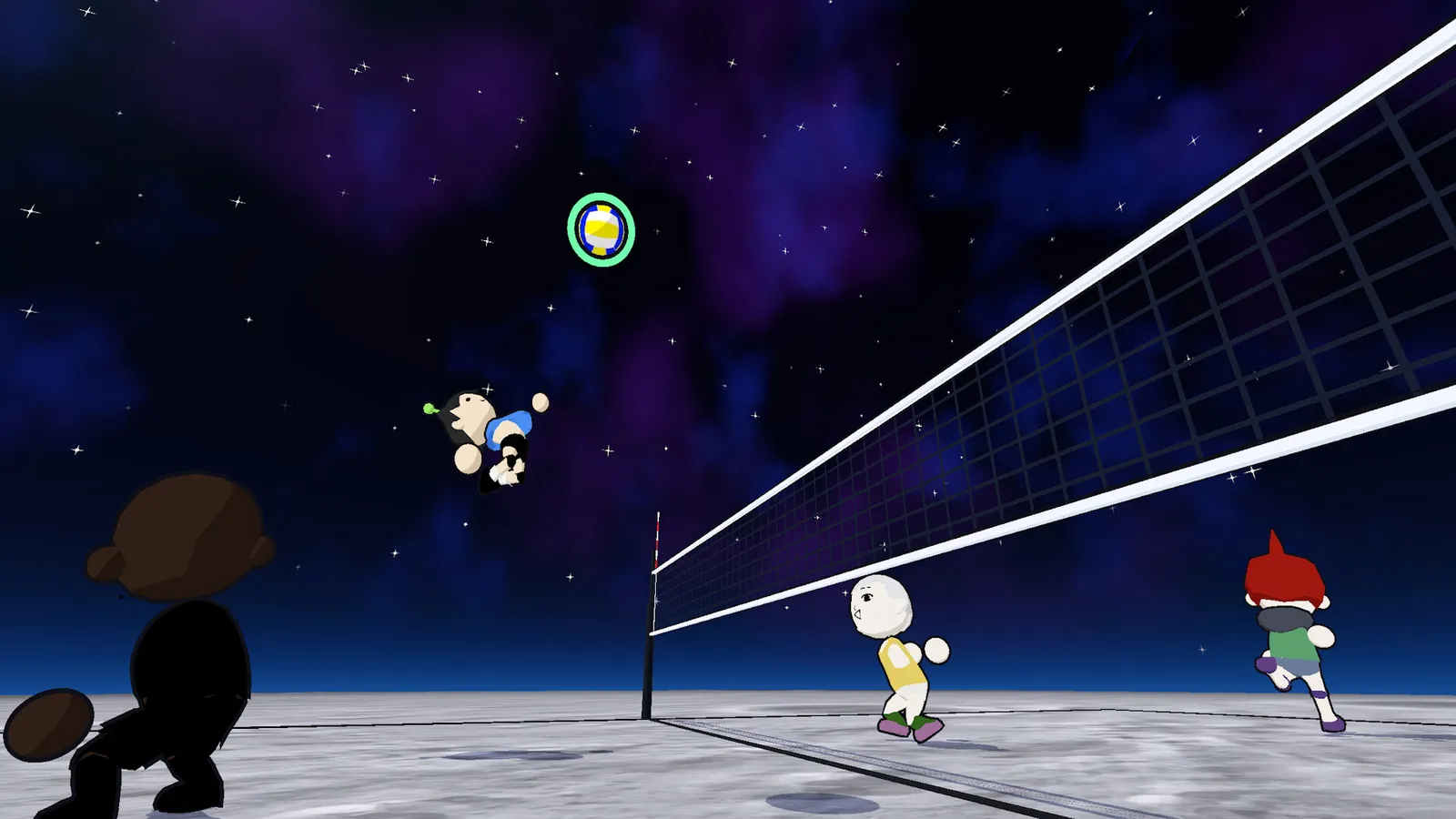
Spend 20-30 minutes per day. Do the drill before you play a real match, not after. If a day feels easy, repeat it; the goal is consistency, not speed.
Day 1: Learn the cursor, not the character
The first session is not about volleyball. It is about separating your two hands. Move with WASD, aim with the mouse, and hit a stationary ball at different targets. Do not jump. Do not dive. Just pass.
Drill: Stand in the backcourt and pass a fed ball to a fixed target ten times. Put the cursor on the target before the ball arrives. Count how many passes land within a step of the target.
Goal: 6 out of 10 passes to the target. If you are below that, slow down. The cursor is the skill.
Read the controls guide before this session so you are not learning the key map and the cursor at the same time.
Day 2: Serve in, then serve smart
A serve that misses is a free point for the opponent. Day 2 is about getting the ball in before you try to make it difficult.
Drill: Hit ten serves to the deep corner, ten to the short middle, and ten to the seam between two receivers. Count only serves that land in. Then count how many of the in-serves forced a bad pass.
Goal: 8 out of 10 serves in from the deep corner. Accuracy first, power second.
The serve guide explains the toss and contact timing, including the float serve.
Day 3: Pass to a person, not to a place
Beginners aim at empty court because it feels safe. In a rally, that empty court is usually the opponent's side. Day 3 teaches you to pass to your setter.
Drill: Play 2v2 against bots. Every receive must be aimed at your teammate. If the pass goes over the net, reset the rally and try again. Do not attack for the first five minutes.
Goal: Five consecutive receives that your teammate can play without moving more than two steps.
If you have no teammate, pass to a target near the net and imagine a setter there. The receive and positioning guide covers the angles.
Day 4: Set a ball a hitter can actually hit
The set is the most under-practised contact in the game. It is also the one that decides whether your team gets a real attack or a desperation swing.
Drill: Set to a fixed spot near the left antenna. Start with the default charge, then vary the hold time. Have a bot or a friend attack from that spot. Count how many sets arrive in front of the attacker rather than on top of them.
Goal: 7 out of 10 sets land in the attacker's approach path.
Do not chase the perfect set. A high, early ball is better than a low, late one.
Day 5: Spike with a plan
Day 5 is the first day you are allowed to hit hard. The point is not power; it is choice. Before every jump, look at the block and pick a lane.
Drill: Attack from the left side against a single blocker. Hit five line, five cross, and five high off the hands. Count how many stay in. Then repeat against two blockers and aim at the seam.
Goal: 10 attacks in a row that either score or force a playable ball. Misses are data, not failure.
The spike guide covers approach timing and contact point.
Day 6: Block and cover as one action
A block that nobody covers is a coin flip. Day 6 pairs the two.
Drill: In 3v3 or 4v4, every time you jump to block, a teammate must call "cover" and move behind you. Play ten rallies. Count how many blocked balls your team keeps alive.
Goal: Three blocked balls recovered in ten rallies.
If you are the blocker, focus on timing, not height. Jump when the hitter's arm starts forward, not when the ball is set. The positioning guide explains the defensive shell.
Day 7: Put it together in 2v2
The final day is a full session of 2v2. No drills, no goals beyond one: complete the three-touch pattern at least once per rally.
Drill: Play five 2v2 matches. After each match, write down one thing that worked and one thing that broke.
Goal: Finish the week able to serve in, pass to a teammate, and set a hittable ball under pressure.
2v2 is the best learning mode because you touch the ball on almost every rally. If you cannot find a partner, play 2v2 against bots and treat the bot as a teammate you cannot control.
The seven-day checklist
| Day | Skill | Drill | Success mark |
|---|---|---|---|
| 1 | Cursor control | Pass to a fixed target | 6/10 on target |
| 2 | Serving | Deep, short, seam | 8/10 in |
| 3 | Receiving | Pass to a teammate | 5 in a row |
| 4 | Setting | Set to the approach spot | 7/10 hittable |
| 5 | Spiking | Line, cross, hands | 10 playable attacks |
| 6 | Block and cover | Recover blocked balls | 3/10 rallies |
| 7 | Full rally | 2v2 matches | One full pattern per rally |
What to ignore for the first week
Three things will distract you:
- Tier lists and meta talk. There is no confirmed ranked mode and no character stats to optimise. Fundamentals beat theory.
- Highlight-reel spikes. A 90 km/h hit into the net is worth less than a soft shot into the gap.
- Other people's settings. Sensitivity and zoom are personal. Start with the default, change one thing at a time.
How to measure progress without a rank
There is no confirmed ranked ladder, so use process stats instead of a badge:
- Percentage of serves in.
- Percentage of passes that a teammate can play.
- Number of complete three-touch rallies per match.
- Number of times you are out of position when the ball lands.
These are honest measures. A player who serves in and passes well will win more than a player who occasionally hits a spectacular spike but gives away half the rallies.
When to move up to 6v6
Move up when you can do three things without thinking: serve in, pass to a teammate, and stay behind the block on defence. If you need to concentrate on the controls, 6v6 will overwhelm you. If those three are automatic, the full court is the best place to learn reading and communication.
The game modes guide explains what changes at each team size, and the tips page covers the habits that separate a competent player from a good one.
FAQ
How long does it take to get good at just volleyball?
The controls take a few hours; the rally sense takes weeks. A focused seven-day plan can make you functional, not expert.
Should I learn on 1v1 or 6v6?
Neither. Start with 2v2. 1v1 is too punishing and 6v6 is too chaotic for a beginner.
Do I need a team to practise?
No. Bots and solo drills cover the first five days. A partner helps on days 6 and 7.
What is the most important skill?
Passing. A team that passes well can attack; a team that passes badly cannot use any other skill.
Further reading
Tested source: drill structure based on the demo's contact set and the control scheme documented in the Steam store page and RPS hands-on.
More just volleyball Guides
The free Next Fest demo ran from October 19 to October 29 and is now delisted. Here is what it contained, what carries over, and how to practise without it.
Fast answers on the just volleyball release date, price, demo, crossplay, gamepad support, LAN, split-screen, system requirements, and launch status.
Every just volleyball team size explained, from the 1v1 duel to the full 6v6 court, with the best mode for beginners and the settings that change a lobby.
A plain-language just volleyball tutorial: the rally flow, the three-touch pattern, each position, and the fastest way to survive your first online match.
A step-by-step guide to playing just volleyball with friends online, on LAN, in split-screen, or via Steam Remote Play, plus fixes for common lobby problems.
How just volleyball multiplayer works across online play, LAN, split-screen, and co-op, including the server browser, lobby sizes, ping, and moderation.
The free public playtest opened on September 23, 2026 on a separate Steam app. Here is how it differed from the demo and whether it is still running.
The developer quoted a $7.99 base price for just volleyball with a 38% launch discount. Here is what is confirmed, what is not, and how regional pricing works.